Plenary Speakers

Find out more information about our plenary speakers 
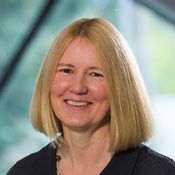
Joanne Etheridge

Joanne Etheridge

Monash University, Australia

Talk Title: 101 Things to do with an energetic electron
0900 - 0950 Tuesday, 1 September, 2026, Auditorium

Joanne Etheridge is an Australian Research Council Laureate Fellow in the School of Physics and Astronomy at Monash University. She obtained a degree and PhD in physics from the University of Melbourne and RMIT University, respectively, before appointments at the University of Cambridge in the Department of Materials Science and Metallurgy and Newnham College, including a Rosalind Franklin Research Fellowship and a Royal Society University Research Fellowship. She returned to Melbourne to join Monash University where she established the Monash Centre for Electron Microscopy. She conducts research in the theory and development of new electron scattering methods for determining the atomic and electronic structure of condensed matter. She applies these methods to understand structure-property relationships in functional materials, including materials for controlling light, energy generation and storage. She is a Fellow of the Australian Academy of Science.
Peter Rosenthal

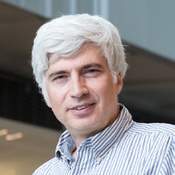
Peter Rosenthal

Francis Crick Institute

Talk Title: Nanographia: cryo-EM observations of viruses and cells
0900 - 0950 Wednesday, 2 September, 2026, Auditorium

Peter Rosenthal obtained a BA in physics from Harvard College and a PhD in biophysics from Harvard University, Cambridge, Massachusetts.

He then moved to the Medical Research Council (MRC) Laboratory of Molecular Biology in Cambridge, UK, before joining the Division of Physical Biochemistry at the MRC National Institute for Medical Research in 2005 (now part of the Francis Crick Institute).
Sergei V. Kalinin

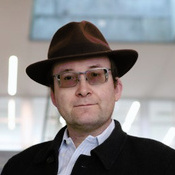
Sergei V. Kalinin

Department of Materials Science and Engineering, University of Tennessee, Knoxville, USA

Talk Title: From Data to Agency: Electron Microscopy for 21st-Century Materials Discovery and Direct Atomic Fabrication
0900 - 0950 Thursday, 3 September, 2026, Auditorium

Sergei V. Kalinin is a Weston Fulton chair professor at the University of Tennessee, Knoxville. From 2022 to 2023, he was a principal scientist at the Amazon Grand Challenge (moon shot factory). Before then, he spent 20 years at Oak Ridge National Laboratory as a corporate fellow and group leader at the Center for Nanophase Materials Sciences.

Sergei has co-authored >700 publications, with a total citation of >63,000 and an h-index of >120. He is a fellow of NAI, Academia Europaea, AAAS, MRS, APS, IoP, IEEE, Foresight Institute, and AVS; a recipient of the APS Adler prize (2024), AVS Medard Welch prize (2023), RMS medal for Scanning Probe Microscopy (2015); Blavatnik Award for Physical Sciences (2018), Presidential Early Career Award for Scientists and Engineers (PECASE) (2009); Burton medal of Microscopy Society of America (2010); 5 R&D100 Awards; and a number of other distinctions.
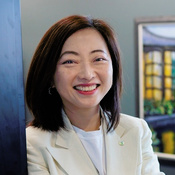
Y. Shirley Meng

Y. Shirley Meng

University of Chicago, USA

Talk Title: Microcopy for Building a Better Battery
0900 - 0950 Monday, 31 August, 2026, Auditorium

Dr. Y. Shirley Meng is the Liew Family Professor at the Pritzker School of Molecular Engineering at the University of Chicago. Dr. Meng is the director of Energy Storage Research Alliance (ESRA), an innovation hub funded in 2024 by US Department of Energy, Office of Science.  

She is the principal investigator of the research group - Laboratory for Energy Storage and Conversion (LESC), that was established at University of California San Diego since 2009. She held the Zable Chair Professor in Energy Technologies at UC San Diego from 2017-2022 and founded the Sustainable Power and Energy Center (SPEC) in 2016. Dr. Meng has received several prestigious awards.


IFSM Symposium Plenary Speakers

Jennifer Zenker

Jennifer Zenker

Australian Regenerative Medicine Institute, Monash University

A/Prof Jennifer Zenker’s scientific journey started at the University of Lausanne (Switzerland), where she obtained her PhD in Neurobiology, receiving the Amicitia PhD Excellence Prize. Next stop was Australia, starting her PostDoc at EMBL Australia (Monash University), shortly followed by a move to Singapore to IMCB, A*STAR. During her Postdoc, A/Prof Zenker specialised on live imaging of early mouse embryos which led to several seminal discoveries, including first author publications in Science (2017), Cell (2018) and Nature Protocols (2017). She was also awarded three international postdoctoral fellowships, from the prestigious Human Frontier Science Fellowship, German and Swiss National Science Foundation.

She then embarked as an independent group leader at the Australian Regenerative Medicine Institute (ARMI, Monash). Her research group contributed to the generation of iBlastoids (Nature, 2021) and discovered RNA asymmetries in early mouse embryos (Nature Communications, 2023). In 2019, she was awarded the Canadian Institute for Advanced Research (CIFAR) Azrieli Scholarship. This was followed by an NHMRC Ideas Grant (2020-2024), an NHMRC EL2 Investigator Grant (2021-2026) and an ARC Discovery Project Grant (2026-2029). As a real mark of her scientific excellence, A/Prof Zenker received the Sylvia&Charles Viertel Senior Medical Research Fellowship (2023-2027), the Eduard Kellenberger Medal (2023) and the ANZSCDB Emerging Leader Award (2025).

Lukáš Palatinus

Lukáš Palatinus

Institute of Physics of the Czech Academy of Sciences

Biography to follow.
Niklas Dellby

Niklas Dellby

Biography to follow
Jose Maria Carazo

Jose Maria Carazo

Spanish National Center for Biotechnology, Spain

Jose Maria Carazo Garcia (h factor = 61, 14.244 citations (ISI Web of Science December 09, 2025), h factor = 75, 21.997 citations (Google Scholar, December 09, 2025))), born in 1959, studied Physics at University of Granada, Spain, and obtained his PhD in Biology at University Autonoma, Madrid, Spain (1984). After the post-doc period at Wadsworth Center of the NYS Department of Health (USA) with Nobel Laureate Prof. Joachim Frank, he joined the National Center of Biotechnology as head of the Biocomputing Unit in 1989, where he was appointed full professor of the Spanish National Research Council (CSIC) in 2005.

Professor Carazo has a sustained experience in the field of Three-dimensional Electron Microscopy under cryogenic conditions (cryo-EM), especially in the methods development area. His laboratory has opened whole new areas in the field, naming just as example the successful family of Maximum Likelihood algorithms (developed in Madrid from 2007 to 2011)or the very much used EMDataBank (started from the European Union project “Bioimage” that he Coordinated from 1996 to 1999). At the level of software developments, his laboratory develops and support software packages like Xmipp and Scipion, who are been actively used by more than 1700 users in more than 13000 projects distributed throughout the world, as well as web services, like 3DBionotes, with close than 1600 new users just in 2022. Note that a specific version of Scipion developed for cryoEM facilities is currently being at the heart of some key resources, such as the European Synchrotron (ESRF), in Grenoble, and SciLab and soon the French Synchrotron Soleil.

On the technology transfer area, he founded the spin-off “Integromics”, winner of the first National Prize of La Caixa Emprendedor XXI (2007) and the Frost & Sullivan award to the Most Innovative Bioinformatics Company in Europe (2008). Integromics was acquired by the US multinational Perkin-Elmer in 2014.