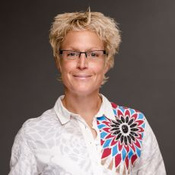
Jennifer Zenker
A/Prof Jennifer Zenker’s scientific journey started at the University of Lausanne (Switzerland), where she obtained her PhD in Neurobiology, receiving the Amicitia PhD Excellence Prize. Next stop was Australia, starting her PostDoc at EMBL Australia (Monash University), shortly followed by a move to Singapore to IMCB, A*STAR. During her Postdoc, A/Prof Zenker specialised on live imaging of early mouse embryos which led to several seminal discoveries, including first author publications in Science (2017), Cell (2018) and Nature Protocols (2017). She was also awarded three international postdoctoral fellowships, from the prestigious Human Frontier Science Fellowship, German and Swiss National Science Foundation.
She then embarked as an independent group leader at the Australian Regenerative Medicine Institute (ARMI, Monash). Her research group contributed to the generation of iBlastoids (Nature, 2021) and discovered RNA asymmetries in early mouse embryos (Nature Communications, 2023). In 2019, she was awarded the Canadian Institute for Advanced Research (CIFAR) Azrieli Scholarship. This was followed by an NHMRC Ideas Grant (2020-2024), an NHMRC EL2 Investigator Grant (2021-2026) and an ARC Discovery Project Grant (2026-2029). As a real mark of her scientific excellence, A/Prof Zenker received the Sylvia&Charles Viertel Senior Medical Research Fellowship (2023-2027), the Eduard Kellenberger Medal (2023) and the ANZSCDB Emerging Leader Award (2025).

Lukáš Palatinus
Lukas Palatinus studied mineralogy and geochemistry at the Charles University in Prague. During his PhD. At the University Bayreuth, Germany he focused on the crystallographic analysis of modulated structures. Later, during the post-doc stay at the EPFL, Lausanne, Switzerland, he developed software for the solution of the crystallographic phase problem for periodic and aperiodic crystals.
Since 2009, Dr. Palatinus is the head of the Group of Electron Crystallography at the Institute of Physics of the Czech Academy of Sciences in Prague. He is developing methods for crystal structure analysis from electron diffraction data. His main focus is on incorporating dynamical diffraction theory into structure determination procedures using 3D electron diffraction data.
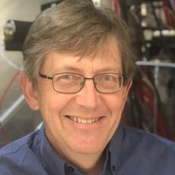
Niklas Dellby
Dr. Dellby’s contributions to electron microscopy instrumentation started in the early 1990’s when he designed the electronics for the Gatan Imaging Filter and Digiscan as a side project while pursuing a PhD in theoretical physics at MIT. In 1995 he went to Cambridge University Cavendish Laboratory with Ondrej Krivanek. At the Cavendish, Dr. Dellby designed key software and the electronics for the first working spherical aberration corrector for STEM, which improved the imaging performance of an old VG HB5 with a quadrupole-octupole C3 corrector. Drs. Dellby and Krivanek started Nion company in 1997, with Dr Dellby serving as Chief Scientist ever since. In 2002, Nion correctors were the first to deliver STEM imaging with a sub-Angstrom probe. Then Nion developed a whole microscope column, with Dr Dellby doing the electronics, many software algorithms, and optimizing the electron optical trajectories. First deliveries of these new columns in 2007 (to Daresbury, UK, and Cornell followed by many others) led to a blossoming of the electron microscopy field with new capabilities like atomic-resolution spectrum imaging and atom-by-atom analysis of 2D materials. He was instrumental in the Nion 200kV cold field emission gun development. Dr. Dellby co-developed the Nion monochromator with Krivanek and others, and it was first installed in 2012 (at ASU, and later Rutgers and other places) where it opened up a new field of phonon spectroscopy in the electron microscope. This led to the need for a new EELS as the requirements for both aberrations and stability go up dramatically when approaching diffraction-limited energy resolution. Getting this up and running, plus improved operating and tuning methods to improve the energy resolution and available current, has led to the current era where <3 meV energy resolution is now possible in STEM.
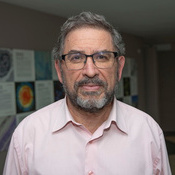
Jose Maria Carazo
Jose Maria Carazo Garcia (h factor = 61, 14.244 citations (ISI Web of Science December 09, 2025), h factor = 75, 21.997 citations (Google Scholar, December 09, 2025))), born in 1959, studied Physics at University of Granada, Spain, and obtained his PhD in Biology at University Autonoma, Madrid, Spain (1984). After the post-doc period at Wadsworth Center of the NYS Department of Health (USA) with Nobel Laureate Prof. Joachim Frank, he joined the National Center of Biotechnology as head of the Biocomputing Unit in 1989, where he was appointed full professor of the Spanish National Research Council (CSIC) in 2005.
Professor Carazo has a sustained experience in the field of Three-dimensional Electron Microscopy under cryogenic conditions (cryo-EM), especially in the methods development area. His laboratory has opened whole new areas in the field, naming just as example the successful family of Maximum Likelihood algorithms (developed in Madrid from 2007 to 2011)or the very much used EMDataBank (started from the European Union project “Bioimage” that he Coordinated from 1996 to 1999). At the level of software developments, his laboratory develops and support software packages like Xmipp and Scipion, who are been actively used by more than 1700 users in more than 13000 projects distributed throughout the world, as well as web services, like 3DBionotes, with close than 1600 new users just in 2022. Note that a specific version of Scipion developed for cryoEM facilities is currently being at the heart of some key resources, such as the European Synchrotron (ESRF), in Grenoble, and SciLab and soon the French Synchrotron Soleil.
On the technology transfer area, he founded the spin-off “Integromics”, winner of the first National Prize of La Caixa Emprendedor XXI (2007) and the Frost & Sullivan award to the Most Innovative Bioinformatics Company in Europe (2008). Integromics was acquired by the US multinational Perkin-Elmer in 2014.